
WHO Calls for Stronger Action to Prevent Malaria Resurgence in Pakistan
Malaria Elimination: A Shared Responsibility for Pakistan’s Future
On World Malaria Day, the World Health Organization (WHO) issued a strong call to action for Pakistan and its partners to prevent a resurgence of malaria. The organization stressed that, for the first time, ending malaria in our lifetime is achievable—but only if countries act decisively.
Pakistan has made progress, reducing malaria incidence by 10% in 2025 compared to 2024. However, the country still reported 1.8 million cases, a stark reminder of the lingering impact of the 2022 climate-driven floods, which triggered a surge from 399,097 infections in 2021 to a peak of 2.7 million in 2023.
WHO warned that gains remain fragile. Climate change, a global funding gap of $5.4 billion, and cuts in health aid threaten to undermine progress. These challenges have disrupted health systems, weakened surveillance, and slowed prevention campaigns, showing how quickly hard-fought victories can be reversed.
To counter these risks, WHO and partners launched a global campaign under the theme “Driven to End Malaria: Now We Can. Now We Must.” The initiative emphasizes protecting lives today while investing in a malaria-free future.
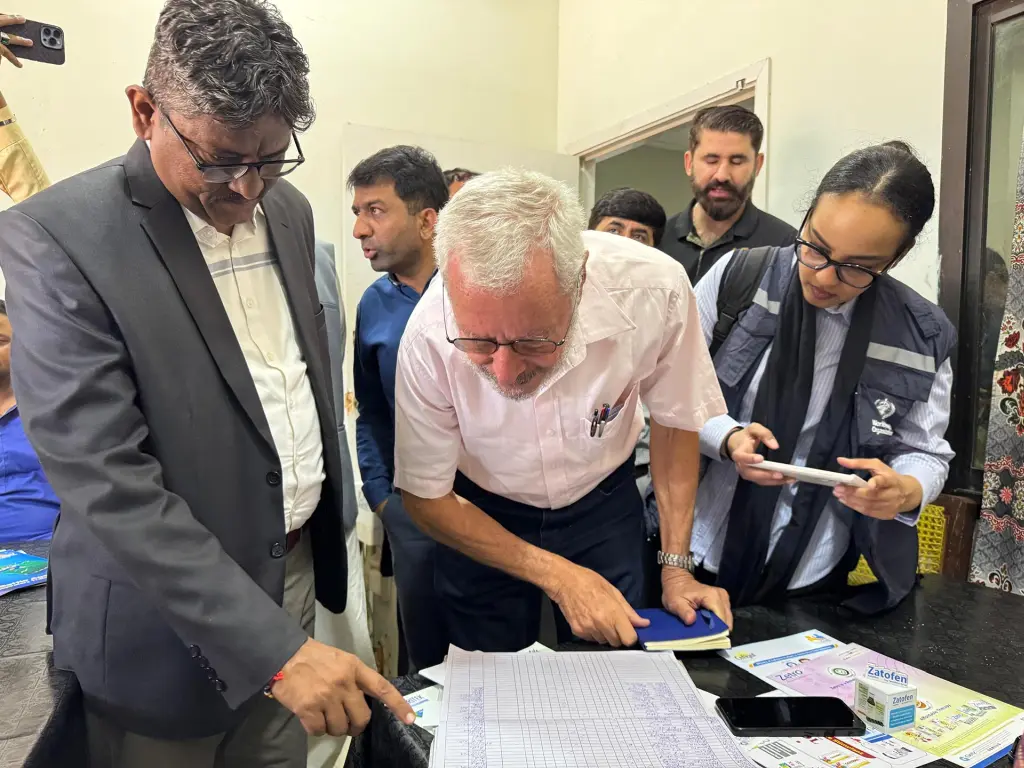
Pakistan has already taken significant steps. In 2025, the country screened 16.9 million suspected cases and provided free treatment to nearly all confirmed patients. Between 2023 and 2025, about 12 million mosquito nets were distributed to protect vulnerable communities. WHO also supported a country-led malaria programme review in April 2026, visiting health facilities across provinces to strengthen prevention, surveillance, and outbreak preparedness.
Malaria transmission remains concentrated in Balochistan, rural Sindh, and parts of Khyber Pakhtunkhwa, where community-based case management is being expanded to reach hard-to-access populations. Advances in medical science—including new vaccines, long-acting treatments, and innovative mosquito control technologies—offer hope that eradication is within reach.
WHO’s Representative in Pakistan, Dr. Luo Dapeng, emphasized that with the tools available today, “we have the historic opportunity to offer a malaria-free world to our children and grandchildren.”
The message is clear: Pakistan’s fight against malaria requires sustained investment, stronger partnerships, and unwavering commitment. By acting now, the country can protect millions of lives and move closer to a future free from malaria.