
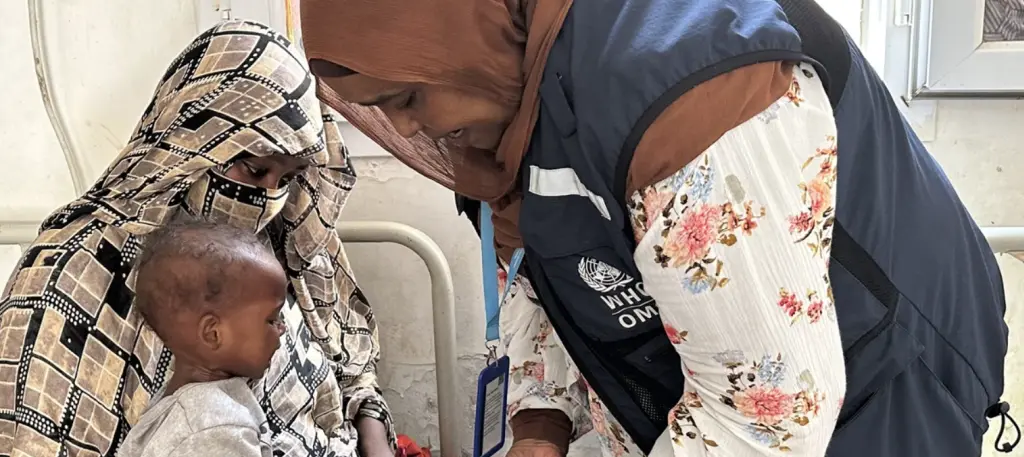
Sudan’s Health Crisis Deepens After Three Years of Conflict
Sudan’s Struggle for Health Amid Conflict
Three years of war have left Sudan grappling with the world’s largest humanitarian and displacement crisis, with devastating consequences for public health. Nearly 34 million people now require humanitarian assistance, including 21 million in urgent need of healthcare.
The toll of conflict is visible across the country. Over 4 million people are acutely malnourished, leaving them vulnerable to disease and medical complications. Outbreaks of malaria, dengue, measles, polio, hepatitis E, meningitis, and diphtheria have been reported in multiple states, including Darfur, Khartoum, and Kordofan.
Sudan’s health infrastructure is collapsing. Thirty-seven percent of health facilities are non-functional, while hospitals and ambulances have been repeatedly attacked. Since April 2023, WHO has verified 217 attacks on healthcare, resulting in more than 2,000 deaths and 810 injuries. The destruction of El Daein Teaching Hospital in East Darfur alone caused at least 64 deaths and left hundreds of thousands without critical medical services.
WHO leaders stress that the crisis is not only about disease but also about access. Patients are forced to undertake long and dangerous journeys to reach functioning facilities, while humanitarian supplies are blocked by ongoing fighting. “Ultimately, the best medicine is peace,” said WHO Director-General Dr. Tedros Adhanom Ghebreyesus.
Despite immense challenges, WHO continues to provide support. Since 2023, the organization has delivered over 3,300 metric tons of medicines and supplies, restored laboratories, and supported vaccination campaigns that reached 46 million people. Sudan also became the first country in the region to introduce malaria vaccines into routine immunization.
WHO has helped treat 118,000 children with severe acute malnutrition and contained two cholera outbreaks, the latest declared over in March 2026 after reaching 24.5 million people with oral vaccines.
Yet, funding remains insufficient. WHO emphasizes the urgent need for sustained humanitarian and long-term financial support, unrestricted access to all areas, and protection of healthcare workers.
Sudan’s health crisis is a stark reminder that without peace, recovery is impossible. Millions remain at risk, and the international community’s response will determine whether Sudan can rebuild its shattered health system and safeguard its people’s future.