
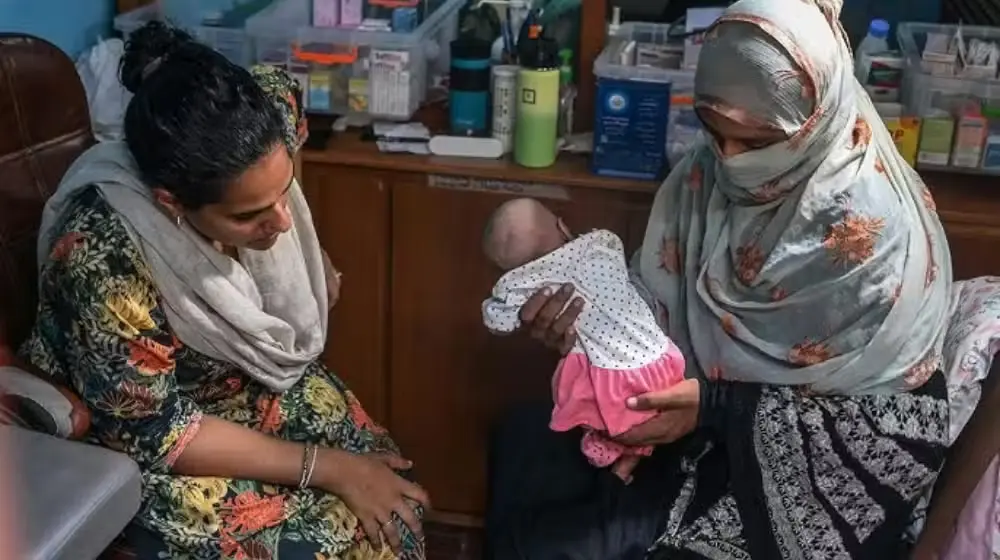
Midwives at the Heart of Maternal Care
Pakistan is grappling with a severe shortage of midwives, a crisis that directly threatens maternal and newborn health. According to the United Nations Population Fund (UNFPA), the country needs nearly 82,000 additional midwives to meet demand. Currently, there are only 2.2 midwives per 10,000 people, about half the global average.
This shortage has devastating consequences. Pakistan accounts for 4% of global maternal deaths, with nearly 100 women dying for every 100,000 live births. Most of these deaths are preventable with timely and skilled care.
UNFPA has called for urgent reforms, including:
- Expanding midwifery education, particularly scaling up the BS Midwifery Program.
- Improving training standards and ensuring deployment in underserved areas.
- Integrating midwives fully into the healthcare system, with career pathways and recognition.
- Providing fair pay, legal protection, and safe working conditions.
Midwives are often the first point of care in rural communities, where hospitals and doctors are scarce. Properly trained midwives can prevent complications during pregnancy, provide essential maternal and newborn care, and reduce preventable deaths.
UNFPA stresses that investing in midwives is not only a health priority but also an economic necessity. Strong midwifery services reduce emergency care costs, ease hospital burdens, and improve long-term productivity.
Despite their importance, many midwives in Pakistan continue to work without adequate equipment, supervision, or safe conditions. To address this, an advanced midwifery clinical skills training program has recently been launched in Tharparkar, aiming to improve maternal and neonatal healthcare in underserved regions.
The message is clear: midwives are essential frontline providers. Strengthening their role in Pakistan’s healthcare system is vital to reducing maternal mortality, protecting newborns, and ensuring healthier communities. Without urgent investment, the country risks deepening its maternal health crisis.

+ There are no comments
Add yours