
AI and Healthcare: Pakistan’s Road to Integration
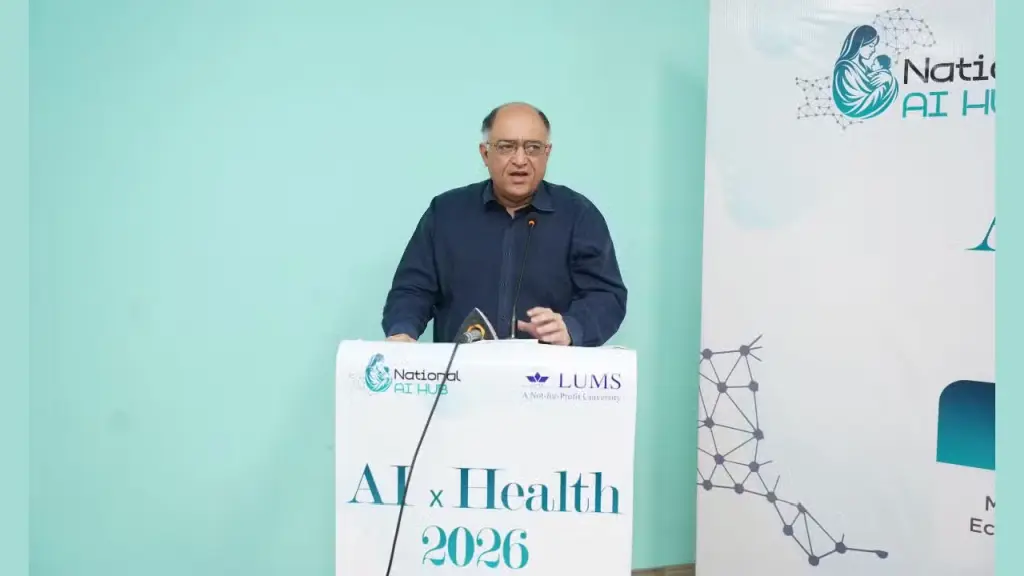
Pakistan’s growing interest in artificial intelligence-driven healthcare took center stage at the country’s first national AI-Health Convening. Organized by the National AI Hub at Lahore University of Management Sciences (LUMS), the event brought together researchers, clinicians, policymakers, startup founders, and public health experts to explore how AI can reshape healthcare delivery.
Opening the session, Rector Shahid Hussain emphasized that meaningful progress in AI-powered healthcare requires collaboration between technologists, medical practitioners, policymakers, and researchers. He noted that isolated efforts will not solve systemic challenges.
Vice Chancellor Dr. Ali Cheema highlighted Pakistan’s pressing health concerns, pointing out that maternal and neonatal mortality rates remain closer to those of low-income countries. He stressed that rapid population growth and limited healthcare spending are straining the system, and while AI offers opportunities, it must be paired with governance, ethical oversight, and institutional reform.
Dr. Maryam Mustafa, Director of the National AI Hub, explained that Pakistan’s AI-health ecosystem is emerging but fragmented. She noted duplication of efforts, siloed institutions, and the absence of shared digital infrastructure as barriers to scaling innovation. “Pakistan has the pieces, but it has yet to draw the map,” she remarked.
Throughout the convening, organizations showcased AI-based health interventions, including tools for maternal and newborn health, digital health platforms, language-based AI systems, and clinical decision support. These pilot projects demonstrated the potential of AI but also revealed the challenges of interoperability and scalability.
Panel discussions underscored the lack of interoperable health data systems, governance frameworks, and sustainable infrastructure. Experts agreed that while innovation is accelerating, long-term impact depends on building integrated systems supported by government institutions, hospitals, researchers, and technology developers.
The convening marked a turning point in Pakistan’s healthcare innovation journey. By identifying gaps and encouraging collaboration, it set the stage for a future where AI can strengthen healthcare delivery, improve patient outcomes, and create a more resilient health system.


+ There are no comments
Add yours