
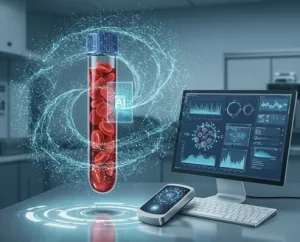
AI Blood Test Predicts Heart Disease Risk 15 Years in Advance
AI Breakthrough in Predicting Heart Disease Risk
A team of researchers at the University of Hong Kong’s LKS Faculty of Medicine has developed a revolutionary AI-powered blood test that could reshape the future of cardiovascular care. Known as CardiOmicScore, this tool can forecast the risk of six major cardiovascular diseases—including coronary artery disease, stroke, heart failure, atrial fibrillation, peripheral artery disease, and venous thromboembolism—up to 15 years before symptoms appear.
Unlike traditional health checks that rely on age, blood pressure, and lifestyle factors, CardiOmicScore dives deeper into the body’s molecular signals. By analyzing proteins and metabolites in blood samples, the AI system detects subtle biological changes long before they manifest clinically. This means patients and doctors can act early, making lifestyle adjustments or preventive interventions to reduce future risks.
The research, published in Nature Communications, highlights how the system integrates multiomics data—genomics, metabolomics, and proteomics—using advanced deep learning techniques. In large-scale studies, including data from the UK Biobank, the tool examined nearly 3,000 proteins and 168 metabolites. These markers reveal critical insights into immune function, metabolism, and vascular health.
Professor Zhang Qingpeng, one of the lead researchers, explained that while genetic risk scores remain fixed from birth, CardiOmicScore reflects a person’s current biological condition. This dynamic approach makes it more accurate than conventional genetic models, especially when combined with clinical details such as age and gender.
The implications are profound. Instead of waiting for symptoms to appear, healthcare could shift toward proactive prediction and prevention. A simple blood test could provide a comprehensive cardiovascular risk profile, empowering individuals to take control of their health years in advance.