
GSK posts COPD win for Nucala as Sanofi-Regeneron rival Dupixent nears delayed FDA decision
GSK is heading into the weekend with a win for its respiratory blockbuster Nucala—but for now, the details are slim.
On Friday, GSK said that its IL-5 antibody Nucala plus inhaled maintenance therapy lowered the annualized rate of moderate or severe exacerbations among chronic obstructive pulmonary disease (COPD) patients for up to 2 years.
In turn, the MATINEE trial, which pitted Nucala against placebo, met its primary endpoint, GSK said in a release.
While detailed data were not presented in GSK’s announcement, the British drugmaker said it plans to share the full results of the study at a future medical conference. GSK added that it will use those data to “inform ongoing discussions with regulatory authorities” about a potential Nucala label expansion.
Nucala made its debut in 2015 with an FDA approval for severe asthma. Since then, the antibody has racked up a series of respiratory nods, including for Churg-Strauss Syndrome, severe eosinophilic asthma and chronic rhinosinusitis with nasal polyps.
Still, Nucala could be looking at a big opportunity in COPD, which GSK estimates affects more than 300 million people around the world. Up to 40% of those patients display type 2 inflammation marked by raised blood eosinophil count, which in turn drives disease exacerbations that can cause lung damage, progressive lung function decline and risk of hospitalization.
Since IL-5 is a key messenger protein in type 2 inflammation, GSK figures its respiratory stalwart could be a good fit for many of those patients.
GSK’s MATINEE trial—which is one of three testing Nucala in COPD—recruited patients with broad clinical presentations of chronic bronchitis and/or emphysema who were already being treated with inhaled maintenance therapy. Patients in the study also had to have evidence of type 2 inflammation marked by raised blood eosinophil count.
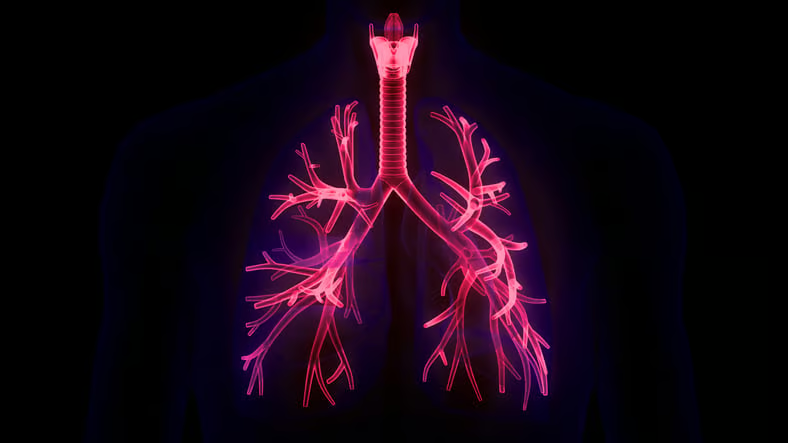
COPD prevents airflow to the lungs and causes breathing problems. The condition, which is a leading cause of death in the U.S., according to the CDC, is mainly caused by smoking, though nonsmokers are also susceptible.