
Tiny Droplets May Hasten Discovery Of New Drugs
Miniature Labs: Conducting 1,000 Experiments on a Single Chip
Imagine performing a thousand different experiments, all on a single, tiny chip. This is now a reality thanks to advancements in microfluidics. Researchers have developed chips capable of handling incredibly small volumes, opening up new possibilities for scientific research and medical diagnostics.
How it Works: Droplet-Based Experiments
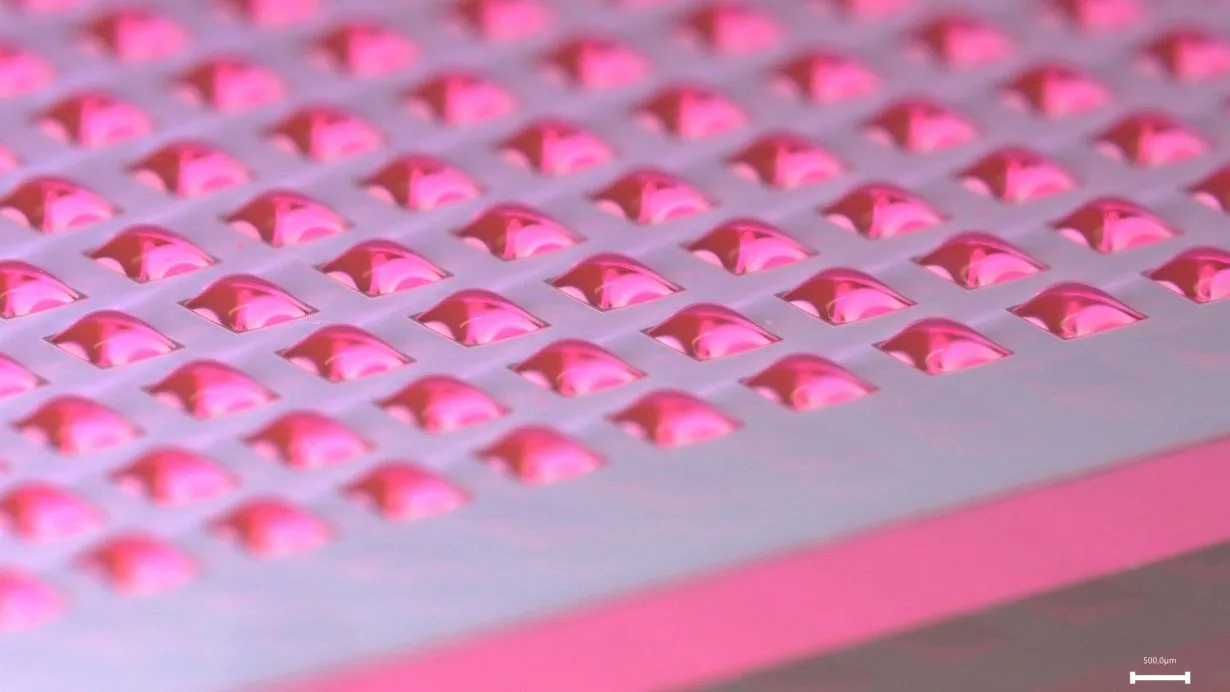
The key to this technology lies in the manipulation of extremely small droplets. Each droplet, measuring just 200 nanoliters (billionths of a liter), acts as a miniature reaction vessel. This allows scientists to conduct a wide array of experiments simultaneously on a single chip.
Customization for Specific Needs
The beauty of these microfluidic chips is their versatility. The size of the chip and the number of droplets can be customized to suit the specific requirements of the experiment. This adaptability makes them valuable tools for a variety of applications.
Potential Applications: From Drug Discovery to Medical Diagnostics
- Drug Discovery: Accelerate the screening of potential drug candidates.
- Medical Diagnostics: Develop rapid and cost-effective diagnostic tests.
- Fundamental Research: Gain new insights into biological and chemical processes.
Advantages of Microfluidic Chips
- High Throughput: Perform a large number of experiments simultaneously.
- Low Reagent Consumption: Reduce the amount of chemicals needed for each experiment.
- Cost-Effective: Lower the overall cost of research and development.
The development of these microfluidic chips represents a significant step forward in scientific research. By enabling high-throughput experimentation with minimal resources, they pave the way for faster discoveries and more efficient solutions to complex problems.